Passing Messages Between My Agent and Claude Code
My AI agent told me it couldn't do what I asked. So I copied its message, pasted it into Claude Code, and let them figure it out through me. Ten tests later, it worked. The whole experience completely blew my mind — and it's simpler than you'd think.
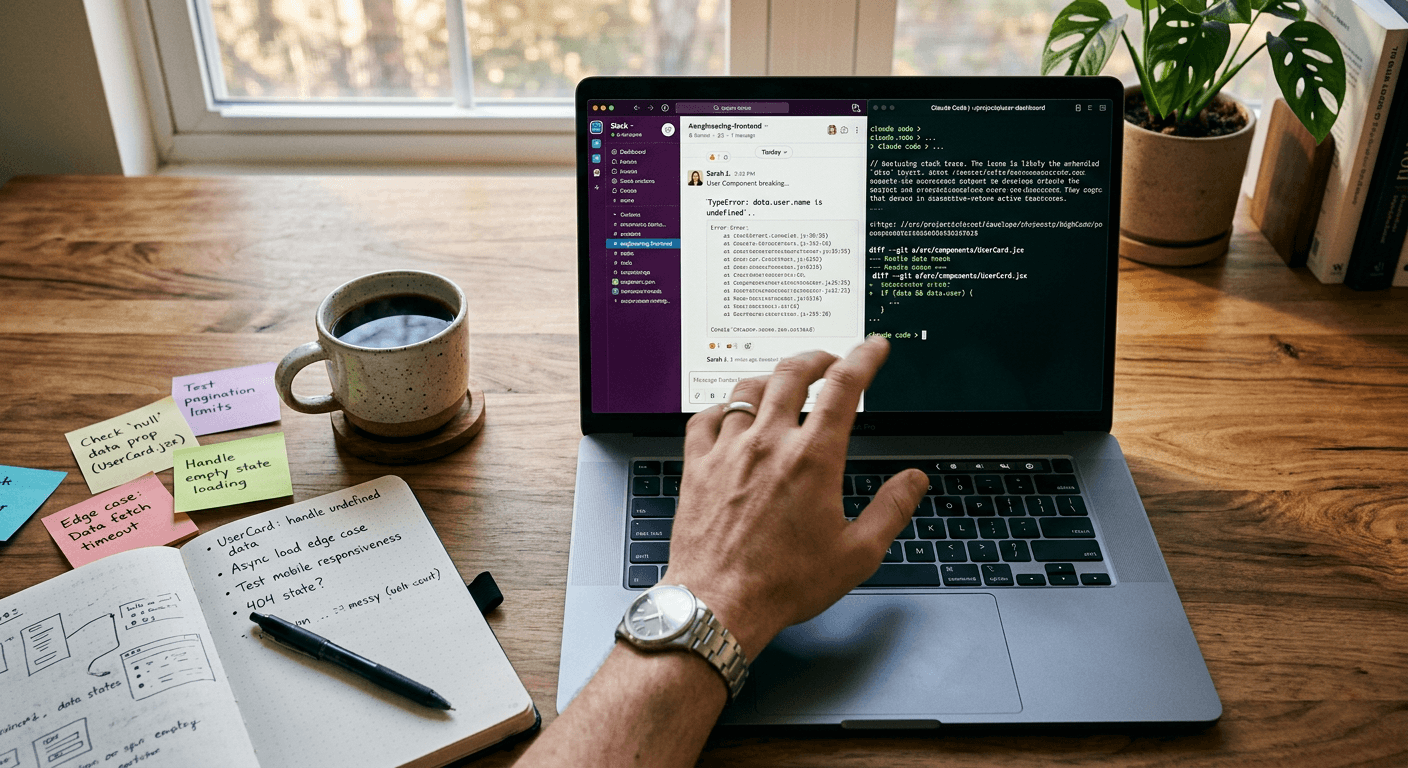
I rolled in this morning, fixed some things, and tried to get Tim to set a reminder in Slack. Tim came back and said he could not do it -- that was not part of his capabilities. And that is when it hit me: I do not need Tim to do everything. I need a different agent for that.
That moment kicked off a whole chain of thinking about agent domains, debugging loops, and what it actually looks like to pass messages between an AI agent and Claude Code with a human in the middle.
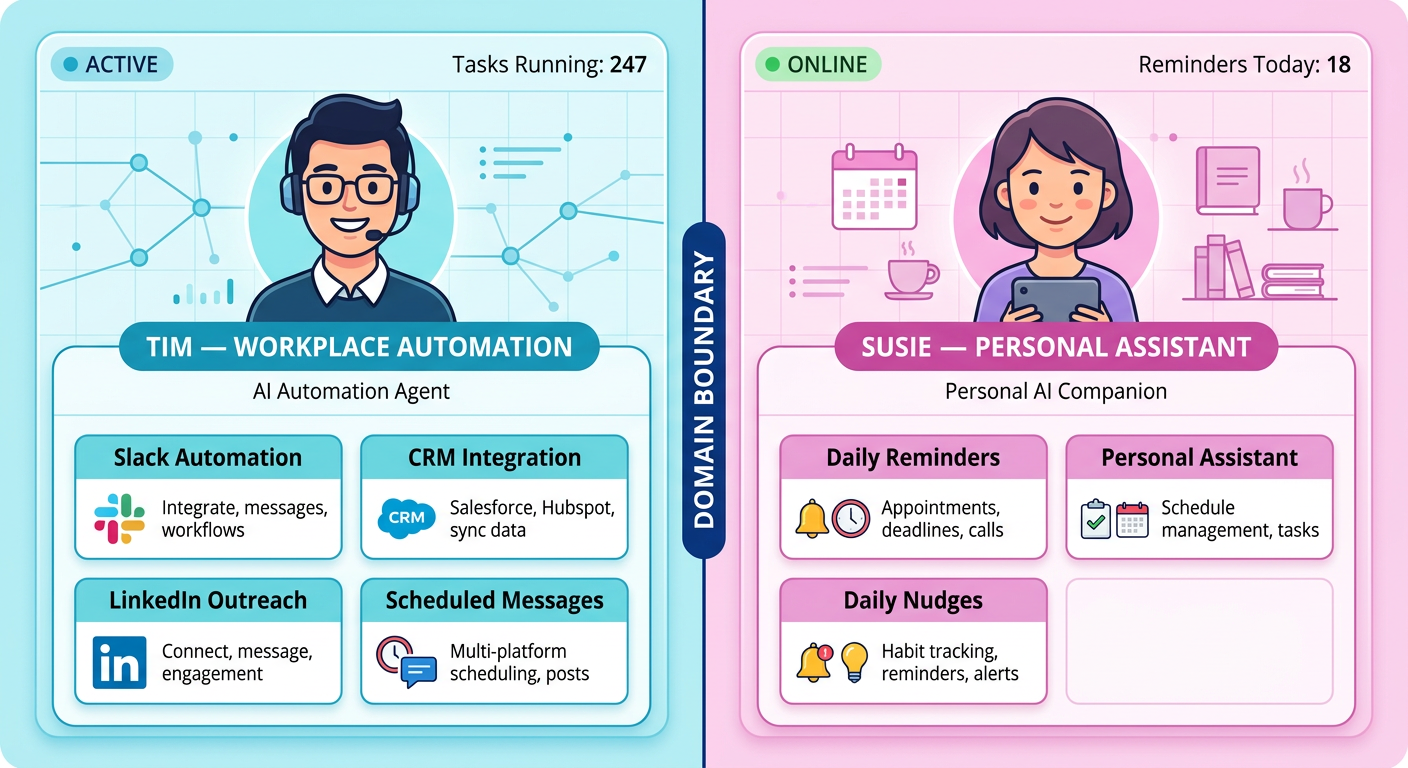 Each agent gets its own domain -- Tim handles outbound, Suzi handles personal rhythm.
Each Agent Gets a Domain. That's the Whole Game.
Defining the capabilities and what you give each agent -- what their domain is -- is actually one of the most important things in creating an effective agent. Tim's domain is outbound: CRM, LinkedIn, scheduled messages, and follow-ups. He is my sales arm. But reminders? Daily rhythm? That is a completely different function.
That is where Suzi Bot comes in. Suzi is going to be my personal assistant agent -- the one who nudges me, reminds me, and keeps my day on track. Tim should not be doing that. When you blur the lines between agent domains, you get fragile systems that try to do too much and do none of it well.
The principle is simple: one agent, one domain. You would not ask your accountant to fix your plumbing. Same logic applies here.
The Fastest Debugging Loop Doesn't Require Agents Talking to Each Other -- It Requires a Human Who Knows How to Relay.
So here is what I was doing. I said to Tim, hey, set a reminder for me at 10 AM. Tim came back and said he could not do it. Instead of trying to wire up some complex agent-to-agent protocol, I just copied Tim's message and pasted it into Claude Code.
Claude Code looked at it, understood the context, and started working on the solution. When Claude Code hit a wall or needed more information, I grabbed that output and fed it back to Tim -- or adjusted the environment based on what Claude told me.
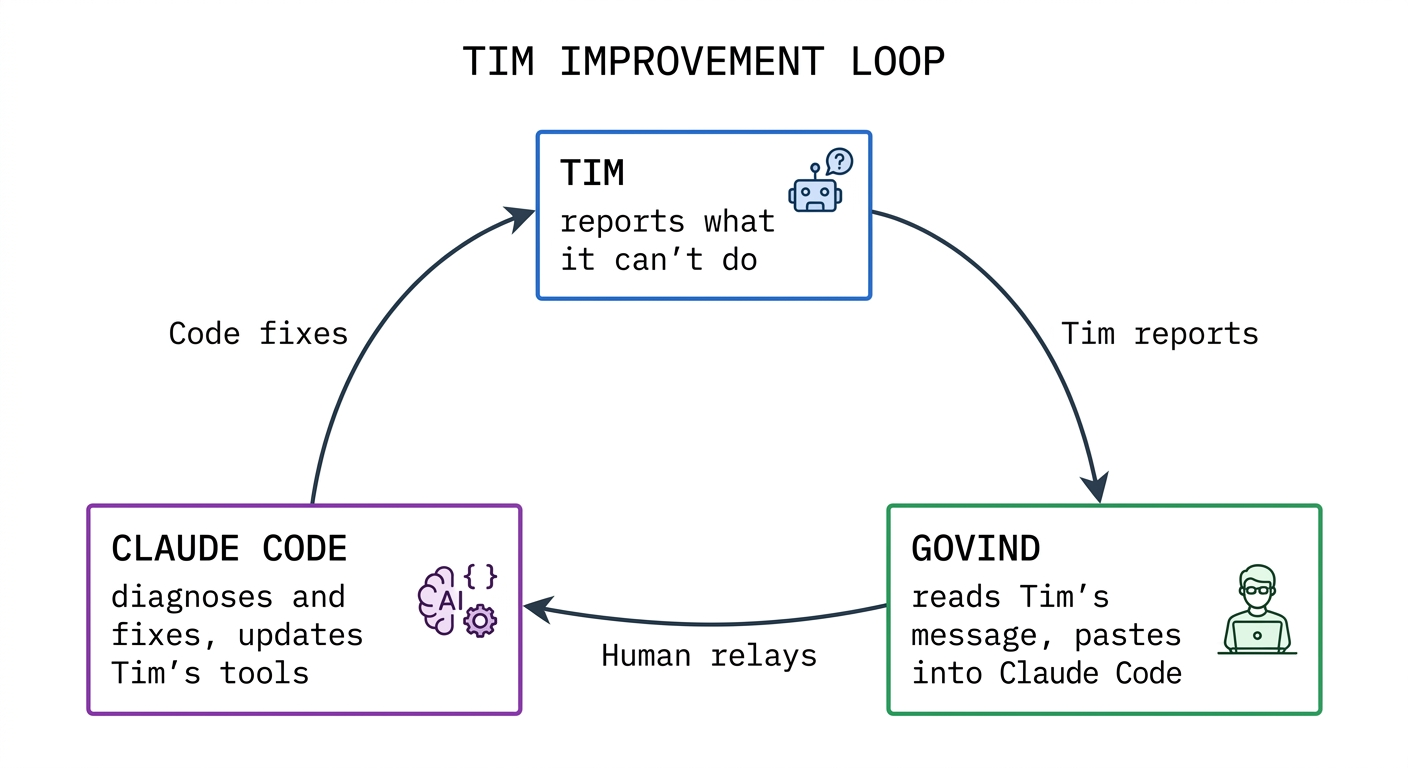 The debugging triangle: Tim reports, Govind relays, Claude Code resolves.
This is what I call the human relay pattern. It is not fancy. It is not some multi-agent orchestration framework with a message bus. It is me, copying and pasting between two AI systems, using my own judgment to translate and filter.
And you know what? It worked. Ten test cycles later -- fixing timing issues, authentication problems, and CI/CD pipeline quirks -- the reminder system was functional. Ten cycles. That is it.
Now, people who are super smart might say, oh, let us wire this up so the agents talk to each other directly. And sure, that is the future. But right now? The fastest path to a working system is a human who understands both agents and can relay context between them. You are the message bus. You are the integration layer. And that is fine.
Adding Claude Directly into Slack Changed the Whole Game.
And then I realized something even bigger. Wait -- I can just add Claude directly into Slack. Not as some external tool I have to context-switch to, but as an actual app inside my workspace.
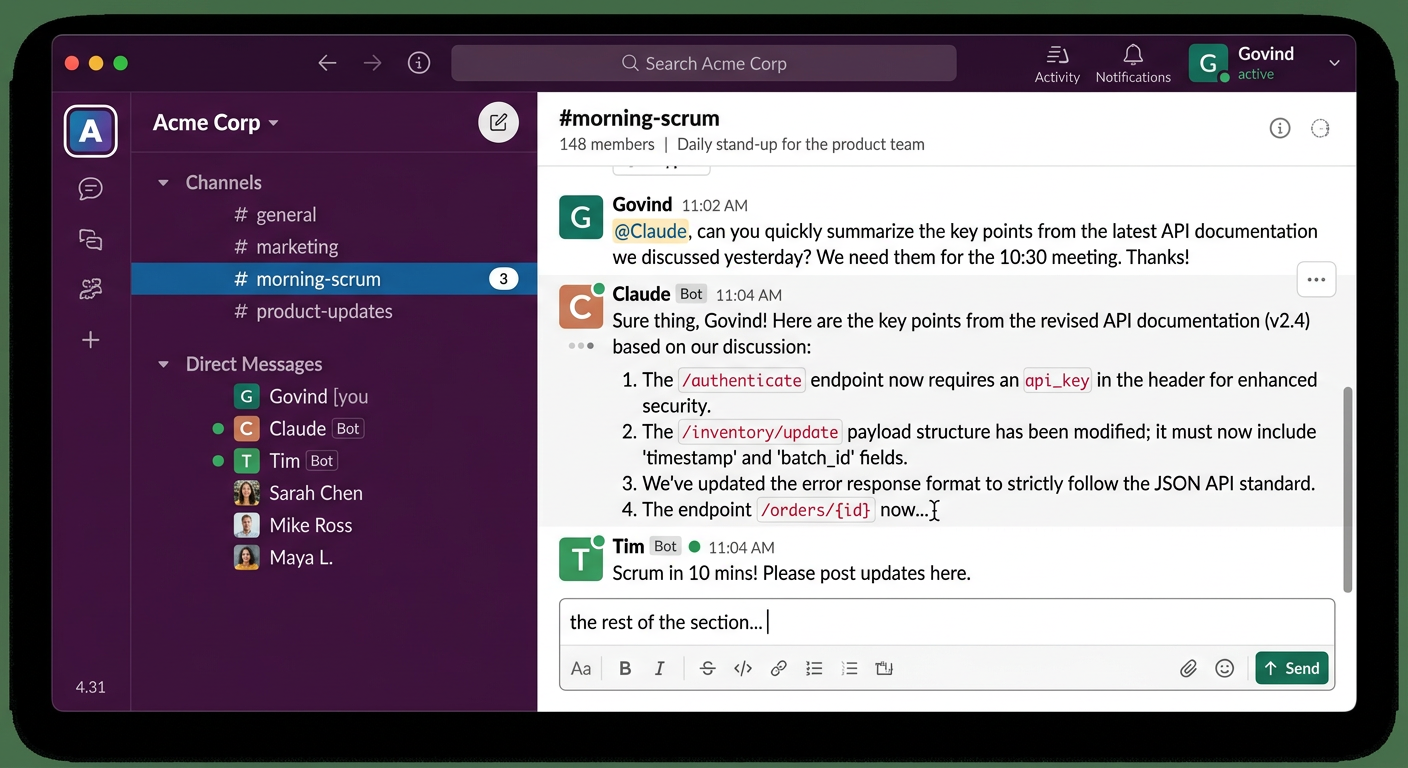 Claude as an active app inside Slack -- no more context switching.
Once Claude was in Slack, the whole dynamic shifted. Now I can talk to Claude right where I am already working. I can ask it to draft content, analyze a thread, or help me think through a problem -- all without leaving the conversation.
Here is the plan going forward: Claude-in-Slack becomes my content creation engine. I talk through ideas, Claude drafts them up, and eventually a Ghost publisher bot takes that content and pushes it live. That is the pipeline: conversation to content to publication, all flowing through Slack.
And look, I am definitely going to market right now with a very deliberate approach. I am staying in the middle of things. I want to understand every piece before I let anything run fully autonomous. Every single day I see reports of autonomous intelligence going sideways. I am not going to be one of those stories. I am going to understand the mechanics, prove the system works with me in the loop, and then open it up.
The takeaway is this: you do not need a perfect system. You need a working system with a human who can bridge the gaps. Pass messages. Relay context. Use your judgment. The agents will get smarter. The integrations will get tighter. But right now, the most powerful debugging tool in AI is a person who knows how to listen to two systems and translate between them.
Dispatch
Get the next field note
New articles, show notes, and practical lessons from the Strattegys AI crew.
 Spotlight
AI Can Generate a Page. LandingRabbit Wants to Make It Usable.
LandingRabbit is trying to solve the part of AI landing-page work that happens after the first draft: structure, editing, source context, feedback, and human judgment.
 Spotlight
AI Safety Has a Capital Allocation Problem
AI safety is usually treated as a lab problem. Aligned Institute is making a different bet: the next phase of safety depends on capital allocation, open research participation, operational risk intelligence, and governance systems that can survive contact with real AI deployment.
 Spotlight
See How AI Changes the Calculus for GTM Strategy
Explore a real-life Mirror Teams strategy session showing how AI lowers the barriers to comparing options, testing assumptions, and turning market analysis into executable work.