Privateering in the AI Caribbean: Riding the Waves of the Fifth Frontier
The Fifth Frontier Tech Wave Is Here. PC, internet, cloud, SaaS, AI: the same consolidation pattern keeps returning, and the privateer’s job is to find the viable lane between the great powers.
 traversing uncharted terrain at the frontier of AI
I wrote a version of this article a long time ago. It was called Privateering in the Cloud Caribbean, and it was based on something that had just happened — a guy from Amazon at some conference saying we're a tech company, not a product company. I thought it was important enough to write about. At the time I think I was one of the only people in that room who thought so. I'm rewriting it now because the same thing is happening again, just bigger.
By my count, AI is the fifth wave.
PC. Internet. Cloud. SaaS. AI. Five waves of major tech competition in my lifetime. The shape every time has been the same — three or four big players consolidate at the top, and a long tail of niche operators sets up shop in between. The names that look dominant in year one are mostly wrong by year five. AltaVista — forget it. Yahoo! is still around, which is honestly impressive. Pets.com? I don't even remember what happened to Pets.com.
When you're a minnow, the most useful thing you can do is recognize that you're a minnow. The people at the top of any of these chains are usually people who were already in that space — who'd spent their whole life and their family's life there. They didn't come out of nowhere. So if you're not already in that or part of that, you're operating in the gaps between the great powers. That's the privateer's lane. You're fighting for survival and trying to profiteer from the changes happening. The illusion that you're going to be up there with the kings and queens — that's not who this is for. This is for the people slogging away.
The first wave: PC
The first wave was the PC. My first one was a Commodore 64 — I played Centipede on it and wrote little bits of code. The bigger PC moment came when I got back from Europe at the end of high school and my parents had a PC running their business. I helped them figure out how to do things in DOS. That was as close as I got to being a PC-era operator. The internet was the first wave I really sailed.
The second wave: internet
This was around '92. I was at UC Davis taking a computer science class because I enjoyed hanging out there. I had a Mac I'd brought to school — a little money from my grandmother, I think, was how I got it. I spent a lot of time in the basement on the Unix boxes. There were these multi-user dungeons running over Telnet — text-only, but some of them were actually pretty advanced. A lot of people from Northern Europe. Dungeon Masters with god-level access who could just kill you instantly. That was the early internet for me.
Then one day I was upstairs in the Mac labs and I saw something glowing on a screen I hadn't seen before. What's that? It was Yahoo! That was the first time I saw the visual web. There's this internet thing — you can do it visually now. It wasn't long before it was everywhere.
 The first time the visual web showed up on a screen in front of me — UC Davis, 1992.
After school I ended up in the North Bay — Petaluma — selling copiers and hating it. I got online one evening and found Monster.com. I can just go apply for jobs online? That's how I got out of selling copiers.
In that same period I worked at two startups. One was a PEO. The other was an early smart-card company where the founders were flying around on private jets and somehow forgetting to pay the company Amex. I was in Louisiana once, my card declined, I had to call them and tell them they had to pay it off. They did. They also made very sure I returned the laptop. I would have done it anyway. I was just on the road a lot. That was the dot-com era from where I was sitting.
I also did a stretch with one of the bigger casualties — I can't even remember the name now, but it was a $90 million burn. The CEO they brought in to figure out what to do with the assets and the technology, that's who I worked with. So I saw the back end of the bust too.
The names that looked dominant in '99: Yahoo, AltaVista, AOL, Pets.com. The names that survived: Google, Amazon, Microsoft, Apple. Three or four. Same shape every time.
The third wave: cloud
The cloud era opened with that Amazon conference moment. I was running MCF Tech. We'd just picked up Walmart and Merck back to back, there was Intuit work too, and the business was finally taking off. I went to a conference and there was a guy from Amazon. He came up at some point, almost in passing, and said, yeah, we're launching this Amazon Web Services thing — we're really a tech company, not a product company. Half the room thought it was ridiculous. Amazon shipped books. The other half nodded politely and moved on. We know how that ended.
 The conference where someone from Amazon Web Services casually broke a category.
The names that looked dominant in cloud's early years were companies like IBM, Oracle, Sun. What happened to Sun? They were huge when it was about hardware and Unix. Now nobody runs Sun. Who even thinks about Unix anymore? The three powers that ended up running cloud are AWS, Azure, and Google Cloud — with Google as a parallel third place. Same pattern, different decade.
The fourth wave: SaaS
Cloud led directly into SaaS — cloud was the B2B infrastructure story, and SaaS is what got built on top of it. By that point I was using SaaS for everything I did, sending emails and running little businesses on the side. MCF Tech was a QuickBase shop, but the more interesting story was what was happening in the broader market. Companies were piling on SaaS subscriptions left and right, and I ended up helping a lot of SaaS companies figure out how to grow in that environment. The competition wasn't should I buy this tool — every department already had a stack of tools. The competition was for attention and budget inside an already-saturated subscription pile.
The fifth wave is here
For me the AI moment was ChatGPT — late 2022, when OpenAI dropped it and everybody freaked out. I'd actually been resisting it. Didn't want to spend time on it. What flipped me was Jensen Huang getting on stage in early 2023 and calling ChatGPT the iPhone moment of AI — said it was unquestionably the most easy-to-use application ever created, that it was performing tasks that were consistently surprising to just about everyone, that this was the most important thing happening in computing. When the guy whose chips run every model on the planet calls it the moment, you stop hedging. Oh. I see what AI is going to become.
Cloud was useful but subtle for me. You heard the idea and you pretty much got it. AI is not subtle. I could literally do the work of an entire team of developers myself. Once you've recognized that, you don't get to un-see it. There's still pace — you can't just snap your fingers — but the compression of idea to manifestation on anything digital is astronomical compared to where it was before.
I literally spend all day with AI now, constantly coding, creating things. And it's weird — you realize, first, how much you can accomplish, and second, that the broader cycle of how things work is going to change so dramatically. It still takes time to flow into how companies actually operate. There were companies for years after the internet showed up that still didn't have email wired in properly. Same pattern starts again, just faster this time — and maybe bigger. Way bigger.
Reading the board
So who's actually on the board right now?
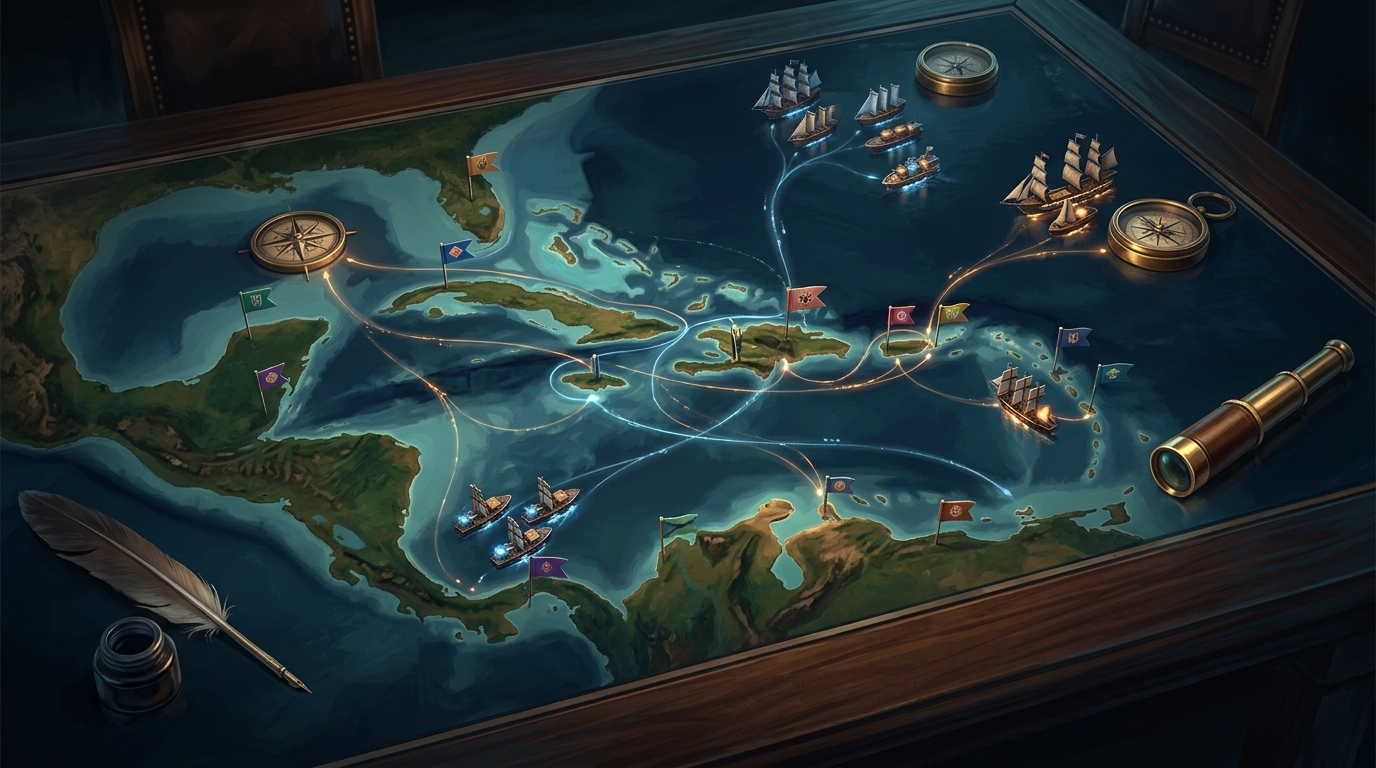 History repeating itself.
OpenAI and Microsoft. It's an interesting question whether OpenAI is functionally an independent power or just Microsoft-controlled. I don't actually know the answer. Sam Altman has been positioning to challenge Apple, which suggests OpenAI thinks it's something more than a Microsoft asset. The reality is probably somewhere in the middle, and where exactly probably matters a lot.
Anthropic. When it comes to coding, Anthropic and OpenAI are both basically required at this point. I run Codex and I run Claude, and they produce very different outputs — different enough that the diff between them is information. The Microsoft-style analogy actually works for OpenAI — it's pragmatic, gets it right, doesn't always do anything that interesting. Claude is more on the creative side. That's not a knock on either of them; it's how I keep both lanes covered.
Google. Google can't compete on raw frontier model mindshare and they kind of know it. They're falling back to the position they've always defended best — captive Google space, consumer apps, search, ad revenue. But they're leading on images right now. NanoBanana is actually really good. They'll keep optimizing for what they were always good at. Google is playing a different game on a different board.
The Chinese models. DeepSeek, Qwen, Kimi, Zhipu. I really haven't spent a lot of time with any of them. You only need so many model providers to actually do work, and at some point you've made your picks.
Meta. I haven't even touched Meta's stuff yet. So I'm not the one to render judgment on it.
Amazon. I'm sure they're focused on enterprise — their cloud clientele, their existing footprint. Bedrock is the obvious move: a multi-model broker so customers don't have to marry one vendor.
Apple. They're changing their CEO. Is that their plan? Get on top of this and get on it quickly?
I don't know. It's going to get interesting, because this isn't the end — this is the beginning of what's about to happen.
This is where the deeper analytical layer kicks in for me. If you've read your Porter, none of this is going to surprise you — markets consolidate because the structure rewards it. Entry barriers compound, scale economies harden, distribution captures rent that subsidizes everything else, and the result is oligopoly at the top with a long tail underneath. Same logic that produced three browsers, three cloud platforms, four big SaaS sovereigns.
Mearsheimer's version is harder-edged. Great powers consolidate because in a system without any meaningful global authority, every player has to maximize its own position because nobody else is going to look out for them. That's why the moves on the AI board today look like classical great-power moves. Anthropic's safety positioning is soft power. Meta's open weights are balancing — keeping a price floor under everyone else. Amazon's Bedrock is what a trading empire does when it doesn't want to choose. Google retreating to consumer + ads is what an old empire does when it can't win the central front.
Same shape, different vocabulary. Markets consolidate because structure rewards it. Great powers consolidate because the system gives them no choice. The AI industry is both at once, which is probably why this wave feels louder than the previous four.
Why it's always three or four
Five waves and the pattern doesn't break. Three or four at the top, never more, never fewer for long.
The structural reason is in Porter — entry barriers compound, scale economies harden, distribution captures rent. The strategic reason is in Mearsheimer — survival in an anarchic system rewards the powers that maximize position.
There's also historical precedent worth dwelling on. The Spanish Main existed because no empire could police its own sea. Spain, England, France competed, and in the gaps, privateers operated under letters of marque, ran prize markets, used neutral ports. They didn't try to become Spain. They didn't try to fight the Royal Navy. They worked the sea the great powers couldn't keep clear, and over a century they made themselves indispensable to both sides. That's the structural place niche operators occupy. Three or four powers at the top is not an accident. The privateer's lane below them isn't an accident either.
Where the money actually is
The board is one thing. The map of who's making money where is another. Right now the AI market roughly segments into five layers, each with its own great-power dynamic and its own privateer opportunity.
Enterprise. Microsoft and OpenAI's home court — Copilot bundling into existing IT, GTM machinery nobody else can match. Anthropic is coming up fast in regulated industries because being the responsible one is real positioning here. AWS Bedrock plays broker for companies that don't want to marry one vendor. The privateer's play here is to be the trusted independent — the one not selling a model.
Consumer. OpenAI is the front door for most people. Google bundles Gemini into Workspace and Search. Apple Intelligence rides on devices. Meta integrates AI into the social products. Distribution is everything in consumer, and the powers own distribution. If you're a privateer, you probably aren't selling consumer.
Developer / API. Most of the price pressure lives here. Open-weight models from Meta and the Chinese providers have flattened the floor. Aggregators like OpenRouter let people route across providers cheaply. Margins are commoditizing fast. The privateer's play in this segment is not raw API volume — it's the layer of judgment, integration, or vertical specificity on top.
Vertical applications. This is the richest privateer territory. Coding tools (Claude Code, Cursor, Codex, Windsurf), legal AI, healthcare workflow, finance research, sales engineering — every domain where deep workflow knowledge plus AI compounds into a real business. The great powers can't specialize without losing their generality. Niche operators win by knowing one segment cold.
Infrastructure. Nvidia is the central power. Neocloud GPU shops (CoreWeave, Together, and others) are the next layer. Foundation-model providers sell the raw material. Hard to enter without billions, possible to thrive on the margins as a specialist — compute orchestration, fine-tuning, deployment tooling.
If you're a privateer reading this, the question isn't which great power do I align with — that's the wrong question. It's which segment matches my actual capability.
The AI privateer manifesto
If three or four powers always end up at the top and the structural place for everyone else is the niche between them, what does the privateer actually do? Three things I keep coming back to.
Sovereign — own your decisions and your supply chain. AI is a market and you have to be a real buyer. Know where you're buying, how the supply chain works, what the unit economics actually are. The default in AI is to get pulled into someone's pricing model — you sign up for a tier, stop paying attention, the bill grows, and a year later you're stuck. Don't marry a sponsor. Keep your decisions yours. Understand consumption, understand pricing, understand who has leverage in the relationship — you or them. The model is the engine; you don't marry the engine company. The whole point of sovereignty is that you stay the buyer, not the bought.
Agentic — agent-centered architecture, intelligence purchasing intelligence. The shift isn't AI as a tool you prompt. It's AI as a team you direct. The right architecture isn't a human asking a model a question — it's agents that own domains, hand off work to each other, and increasingly do the buying themselves. Intelligence purchasing intelligence. That's the model. The human stays in the loop on strategy and on what actually matters; the agents keep the work moving. Once you've built that, you stop thinking about AI as a productivity tool and start thinking about it as a team you've hired.
Optimized — build exactly what you need. The biggest leverage AI gives you isn't faster prompts or smarter answers. It's that you can use AI to build the custom tool that fits your exact work — software designed to your specific workflow, your team, your business model, tuned until it fits like a glove. The traditional answer — buy a SaaS subscription, accept whatever it does, work around the parts that don't fit — is increasingly the wrong one. A lot of the SaaS you're paying for is going to get replaced by software you build yourself, with AI doing the heavy lifting. Push AI to the highest level it will go. The tool nobody else has is the one with the most leverage.
These three together are the privateer's discipline. They're how you build a business that survives the great powers rather than getting eaten by them.
 Out into the next watch.
Closing
Five waves. Same pattern each time. The fifth one is here, and it isn't the end. It's the beginning of what's about to happen.
Authority comes from pattern recognition, not prophecy. Understanding your environment underpins success — not just hope and desire and belief that you can. You have to have real substance behind your ambitions. We don't know if we'll find the treasure. We know we're sailing.
Dispatch
Get the next field note
New articles, show notes, and practical lessons from the Strattegys AI crew.
 Spotlight
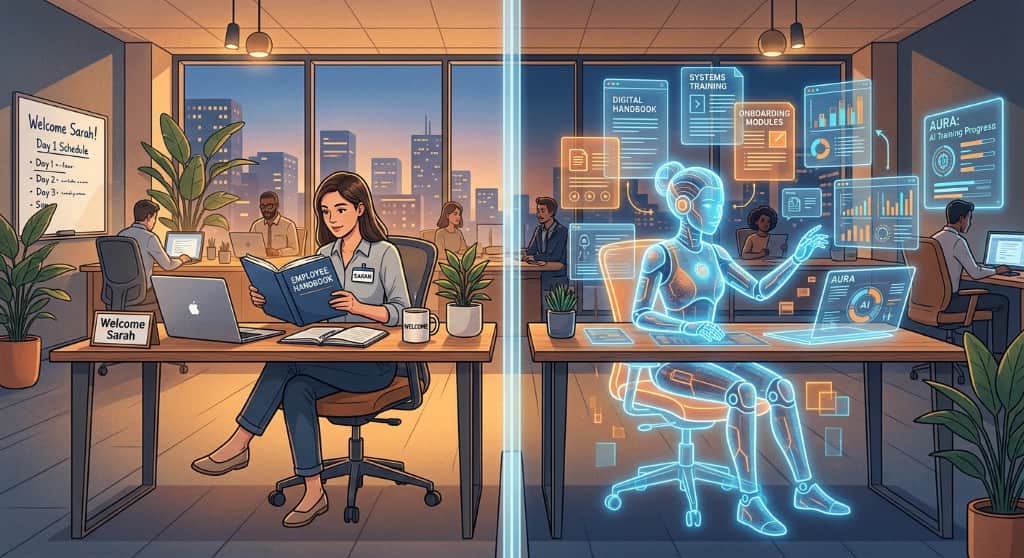
How to Train Your AI: The Employee Onboarding Framework for Autonomous Agents
Stop configuring AI like software. Start onboarding it like an employee. Here's why your next AI agent needs the same 90-day training plan as your human hires.
 Spotlight
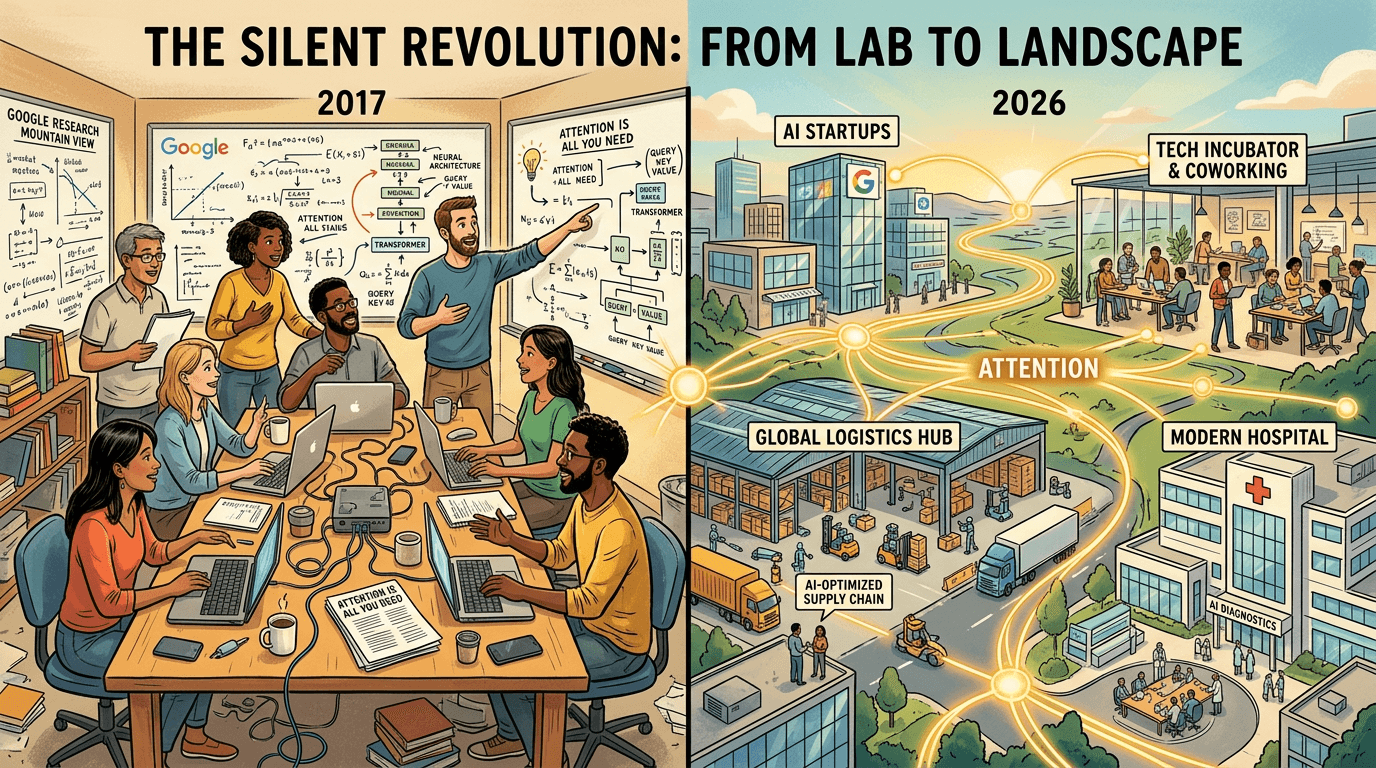
Are You Paying Attention to Attention Is All You Need?
The 2017 paper that 8 Google researchers published — then immediately quit to build companies from — quietly became the blueprint for every AI tool you use today. Here's what it actually means for your business.
 Spotlight
AI Can Generate a Page. LandingRabbit Wants to Make It Usable.
LandingRabbit is trying to solve the part of AI landing-page work that happens after the first draft: structure, editing, source context, feedback, and human judgment.