AI Can Generate a Page. LandingRabbit Wants to Make It Usable.
A Strattegys Spotlight on LandingRabbit, the human edge of AI-enabled landing page building, and why the next useful layer is not generation but workflow.
LandingRabbit is trying to solve the part of AI landing-page work that happens after the first draft: structure, editing, source context, feedback, and human judgment.

There is a specific frustration that shows up once teams start using AI to create landing pages.
The page appears quickly. The words are there. The sections are there. The design may even look impressive at first glance. Then the real work starts: cutting the bloated copy, fixing the structure, moving sections around, matching the brand, checking the claims, and turning a generic AI output into something a founder or marketer would actually publish.
That is the gap LandingRabbit is trying to close.
This Spotlight comes from a conversation with Toni Hopponen, founder of LandingRabbit, about what happens after AI makes the first draft easy. The practical question is simple: if AI can generate a page in seconds, why do so many teams still end up stuck in cleanup mode?
The deeper question is more interesting:
What should the human actually do when AI is present in the design process?

Govind Davis
Govind frames the conversation around how humans guide AI-generated landing pages.
View on LinkedIn
Toni Hopponen
Toni builds LandingRabbit to turn source material and feedback into usable B2B pages.
Visit LandingRabbitThe First Draft Is No Longer The Bottleneck
AI landing-page tools have become good at getting people past the blank screen. Webflow, Framer, Durable, Unbounce, Landingi, Figma, Google Stitch, and other systems now offer some mix of prompt-based generation, page building, copy assistance, design exploration, SEO support, publishing, testing, or personalization.
That is useful. It also changes the problem.
The hard part is less often "can I get a page?" and more often "is this the page I should put in front of customers?"
In the LandingRabbit source conversation, Toni described the familiar pattern: generic AI can produce a page that has too much content, too many design ideas, and not enough confidence behind the structure. The user then becomes the strategist, editor, designer, proofreader, and cleanup crew.
That is not a small flaw.
If a system gives you a full page but leaves you unsure what to trust, the page is not really done. It is a plausible draft that now requires human judgment.
Why LandingRabbit Is A Useful Case
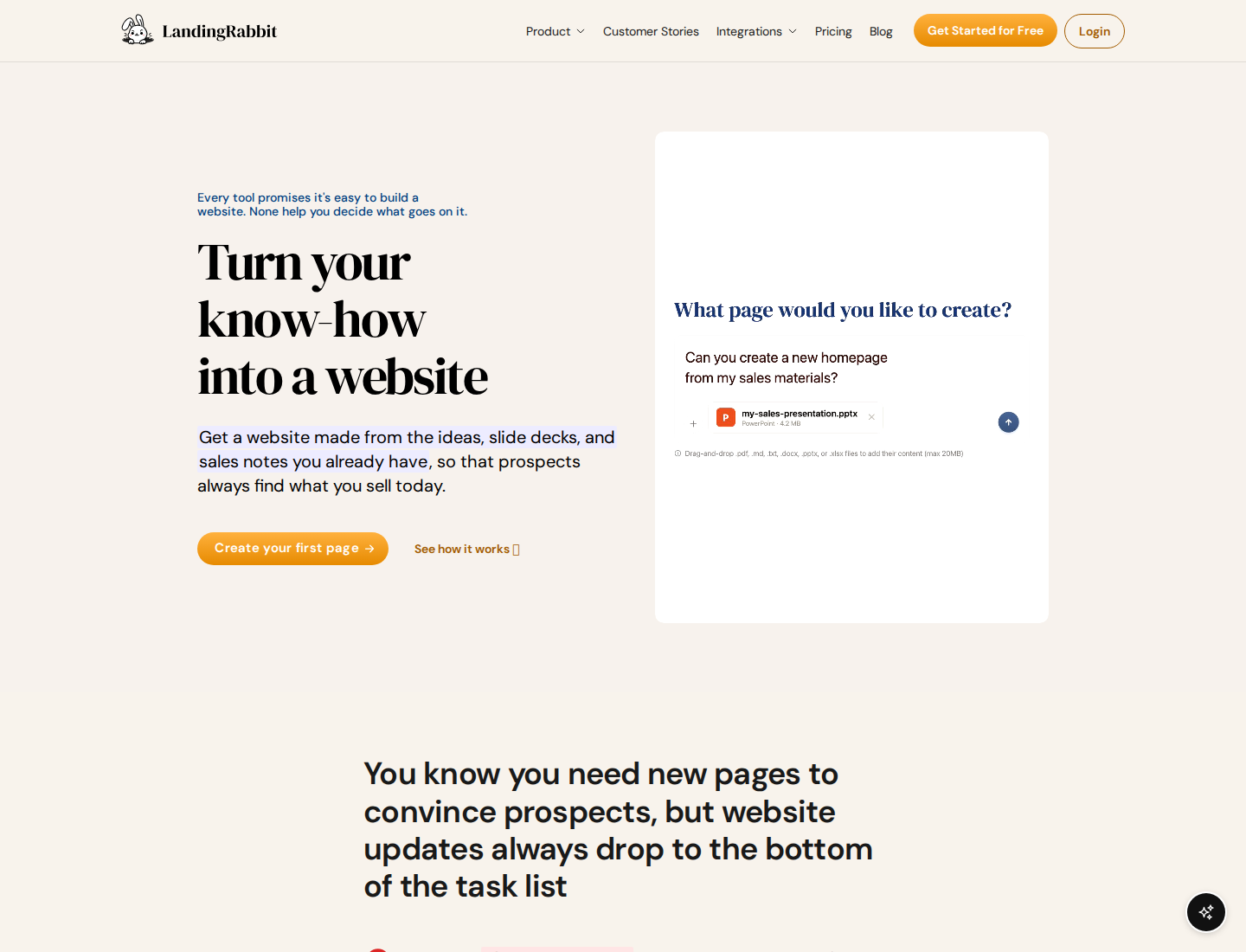
LandingRabbit's public positioning is direct: it helps B2B founders and GTM experts create websites from ideas, slide decks, product specs, and sales materials they already have.
That matters because most teams do not start with nothing.
They have sales calls. They have product notes. They have messy decks. They have half-finished positioning. They have a founder who can explain the product well on a call but does not want to spend the next afternoon turning that explanation into a polished page.
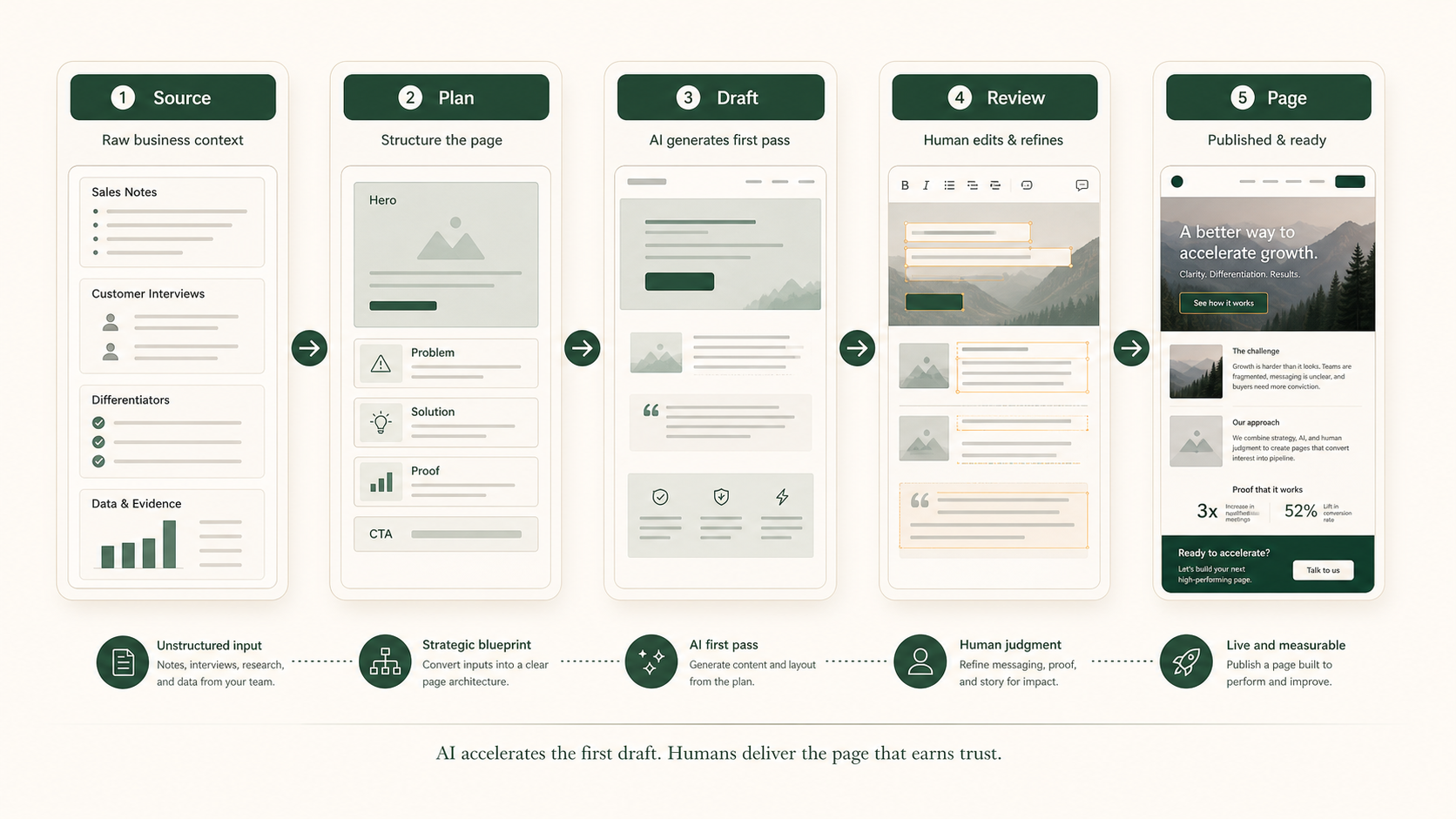
The product opportunity is not simply to generate more copy. The opportunity is to take the material that already exists and turn it into a usable page plan.
That is the part that makes LandingRabbit interesting as a Spotlight subject. It is not trying to win by proving that AI can write landing-page text. Everyone can see that. It is trying to make the middle of the process easier: deciding the page structure, drafting from actual business material, editing with the page in view, and keeping feedback close to the work.
The Human Edge Moves Into The Interaction
Designing with AI is not the same as handing work to a silent machine.
It is an interaction pattern.
The user gives context. The system proposes. The user critiques. The system revises. The user decides whether the result is strategically true.
That is where the human edge moves.
It is not only prompt writing. It is noticing mismatches. It is deciding what should be removed. It is knowing that a claim sounds good but is not yet supported. It is seeing that a hero section is polished but aimed at the wrong buyer. It is knowing when a page is trying to say three things when it should say one.
This is why the page plan matters.
A good landing page is not just a sequence of attractive sections. It is an argument. It starts with a person, a problem, a promise, proof, and a next step. If the structure is wrong, better copy will not fully save it.
The Option Set Is Getting Crowded
For a team trying to build AI-assisted landing pages in 2026, there are at least four broad paths.
Prompt-to-page builders can create a page fast. Design-canvas AI can help teams explore layout directions. Optimization platforms can test and personalize after launch. Agentic production workflows can keep source material, strategy, copy, review, and deployment closer together.
Each path solves part of the work.
None of them removes the need for human judgment.
In fact, the more AI can generate, the more important it becomes to decide what should not be generated, what should be cut, and what must be verified before publishing.
That is the philosophical edge of this category.
AI lowers the cost of production. That makes taste, context, and truth more important.
Landing Pages Are Systems, Not Screenshots
A real landing page is not just a hero section and a CTA.
It has to load quickly on mobile. It needs readable contrast and accessible markup. It needs metadata, analytics, form handling, CRM handoff, campaign tracking, and a plan for what happens after visitors arrive.
That is why the workflow around the page matters so much.
A chat-based draft can produce text. A design tool can produce a layout. An optimizer can run an experiment. But a campaign still needs a place where the offer, audience, proof, structure, page state, and launch checklist live together.
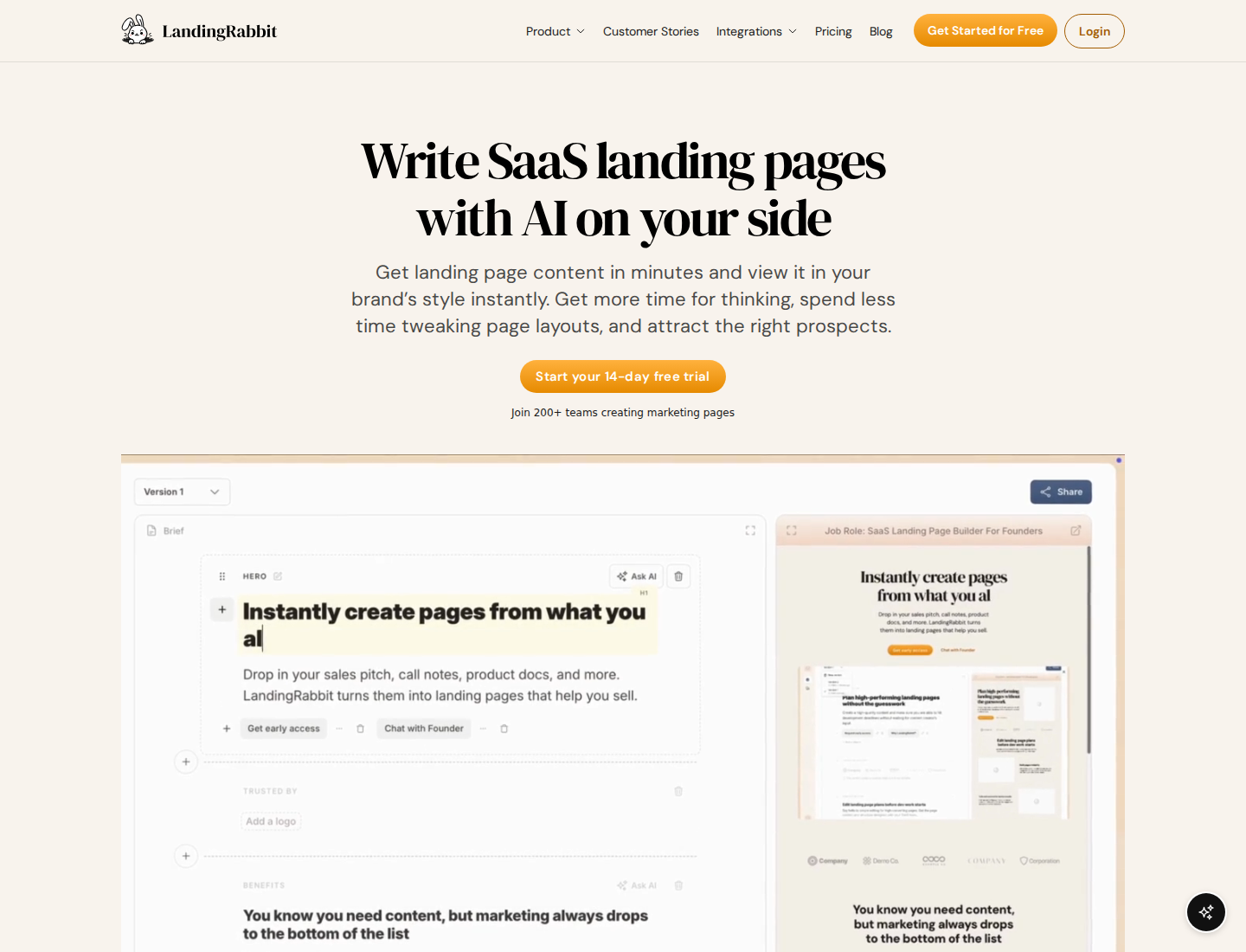
LandingRabbit's product direction points at that layer. The public site emphasizes brand learning, creating pages from existing materials, choosing the best structure for a page goal, editing drafts like Notion with a live preview, and sharing work for feedback.
Those are not ornamental features.
They are the work.
The Better Standard For AI Page Builders
The standard for AI landing-page builders should be higher than "generate a landing page from a prompt."
A credible workflow should know the campaign goal. It should preserve source context. It should generate a clean starting structure. It should make every section editable. It should keep claims traceable. It should support mobile review. It should connect the page to the measurement plan.
That is a more demanding standard.
It is also the useful one.
AI has made page production faster.
The next layer is making the work more usable.
Sources
Dispatch
Get the next field note
New articles, show notes, and practical lessons from the Strattegys AI crew.

 Spotlight
AI Safety Has a Capital Allocation Problem
AI safety is usually treated as a lab problem. Aligned Institute is making a different bet: the next phase of safety depends on capital allocation, open research participation, operational risk intelligence, and governance systems that can survive contact with real AI deployment.
 Spotlight
See How AI Changes the Calculus for GTM Strategy
Explore a real-life Mirror Teams strategy session showing how AI lowers the barriers to comparing options, testing assumptions, and turning market analysis into executable work.
 Spotlight
Session Terminal: A Workspace for Persistent AI Work
The command line is still the fastest lane into AI work. But once you run multiple agents, the real problem becomes drift: lost purpose, hidden status, fragile recovery, and context scattered across too many surfaces.