See How AI Changes the Calculus for GTM Strategy
What we learned from a Mirror Teams strategy session about how AI lowers the barriers, increases the speed, and changes the output of go-to-market analysis.
Explore a real-life Mirror Teams strategy session showing how AI lowers the barriers to comparing options, testing assumptions, and turning market analysis into executable work.

Here is what we learned from a strategy session with Mirror Teams: AI lowers the barriers to comparing options, testing assumptions, and turning a live business conversation into an operating plan.
In my strategic discussion with Mohamed Barakat, a rough go-to-market question became a focused ICP, offer architecture, landing-page direction, and PDF-ready strategy brief inside one working session.
The point is not that AI replaces strategy.
The point is that AI changes how much strategy you can actually do while the question is still alive.
The Strategy Question Was Real
The original question for Mirror Teams was broad:
Should Mirror Teams sell outsourced growth services from Egypt into the U.S. market, or should it help U.S. companies expand into the Middle East and Africa?
That sounds like positioning, but it is more than positioning.
It requires comparing markets, margins, credibility, buyer urgency, operational delivery, and the long-term shape of the business.
Generic outsourcing might be easier to explain. It also risks turning Mirror Teams into another vendor in a crowded labor-arbitrage market.
MEA expansion support is harder to package. But it gives the company a more valuable role: helping U.S. AI, SaaS, cybersecurity, infrastructure-tech, and B2B software companies build real regional pipeline.
That is a better strategic question.
It is also the kind of question where AI becomes useful.
Not as a magic answer machine.
As a way to make more of the tradeoffs visible.
AI Lowers The Barriers To Analysis
Traditional strategic analysis is hard to execute because every branch creates more work.
If you want to compare options, you need someone to define the options, gather context, write the assumptions, build a recommendation, turn it into a brief, and then reshape that brief into something a team can act on.
That work still requires judgment.
But AI lowers the barrier to each pass.
You can compare the outsourcing model against the MEA market-entry model. You can ask what works short term, what scales long term, and what gives the brand a defensible position. You can narrow the ICP. You can pressure-test the offer. You can convert the direction into a landing-page brief. You can produce an artifact that another person can review instead of relying on memory from the call.
That changes the tempo.
Instead of strategy being a separate downstream document, it becomes part of the live operating workflow.
A short walkthrough showing the AI-assisted strategy-output workflow from the Mirror Teams discussion.
The Useful Workflow Was A Sequence
The useful AI workflow was not one prompt.
It was a sequence:
- Define the strategic options.
- Compare short-term value, long-term value, and scalability.
- Narrow the ideal customer profile.
- Convert the recommendation into page direction.
- Turn the thinking into a one-page GTM brief.
- Capture the work as artifacts that can be reviewed, reused, and distributed.
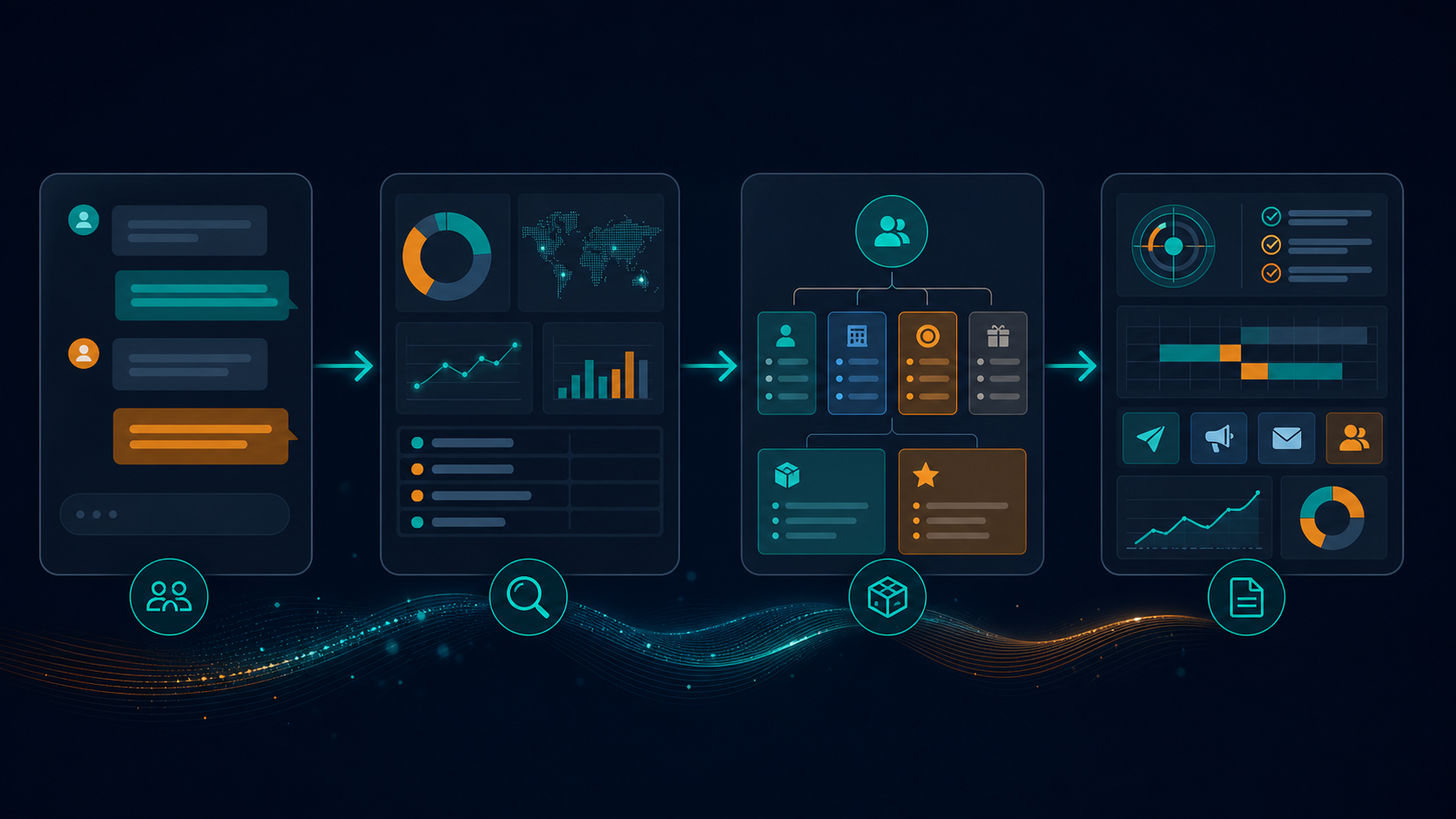
That matters because go-to-market teams usually lose time in the gaps between tools.
Research sits in one place. Notes sit in another. Strategy sits somewhere else. Production assets end up scattered across folders, drafts, chat windows, and task boards.
AI becomes much more useful when it works inside an operating surface where the campaign, source material, artifacts, review state, and next distribution steps stay connected.
That is the pattern we are building toward at Strattegys.
The Mirror Teams Recommendation
The AI-assisted workflow clarified that the stronger offer was not generic outsourcing.
The better position was a higher-value MEA expansion pod for U.S. technology companies that need regional market-entry support.
That is a strategic output, not just a tagline.
It defines:
- Target market
- Buyer logic
- Offer shape
- Delivery model
- Website direction
- First campaign angle
The ICP narrowed from generic U.S. tech to U.S. B2B technology companies selling into regulated, infrastructure-heavy MEA markets.
The offer shifted from commodity calling services toward a higher-margin expansion system.
The output became a one-page GTM guide and a landing-page direction.
That is the part worth paying attention to.
AI did not replace the discussion with Mohamed. It made the discussion more productive. It gave the strategy a shape, turned the shape into artifacts, and made the next decision easier.
The Market Is Moving This Way
Current market research points in the same direction.
Bain argues that sales AI needs clean context because go-to-market data is usually scattered across systems, and the biggest gains come from reimagining sales processes rather than simply automating old ones.
In a separate analysis, Bain frames AI as a widening gap between marketing leaders and laggards, not a small productivity add-on.
Salesforce's 2026 State of Sales report points to sales-agent use cases moving into mainstream commercial workflows.
The common thread is that AI value depends on workflow design, data context, and human judgment.
For GTM teams, that means the winning pattern is not "AI writes the campaign."
The better pattern is:
AI helps the team build the operating logic for the campaign.
Why This Matters
This is where AI strategy work becomes practical.
It gives the human operator a faster way to move from uncertain direction to visible choices.
It makes the tradeoffs easier to inspect.
It produces artifacts that can be improved instead of abstract conversations that disappear after the call.
The best GTM AI systems will not be standalone chat windows.
They will be production surfaces where research, strategy, content, and distribution stay connected.
The work still needs human judgment.
But the cycle time between "what should we do?" and "here is the first useful version" is getting much shorter.
That is the real shift.
If you want to see this kind of workflow applied to your own product, market, or campaign, Strattegys Spotlight is built for exactly that: take a real business problem, turn it into a useful article and strategic package, and distribute the strongest version of the story.
People
- Govind Davis, Strattegys
- Mohamed Barakat, Mirror Teams
Dispatch
Get the next field note
New articles, show notes, and practical lessons from the Strattegys AI crew.

 Spotlight
Session Terminal: A Workspace for Persistent AI Work
The command line is still the fastest lane into AI work. But once you run multiple agents, the real problem becomes drift: lost purpose, hidden status, fragile recovery, and context scattered across too many surfaces.
 Spotlight
The Voice Layer Behind Real AI Production Work
AI production is not just about better models. It is about moving intent through the system quickly enough that agents, terminals, editors, and publishing workflows can keep up.
 Spotlight
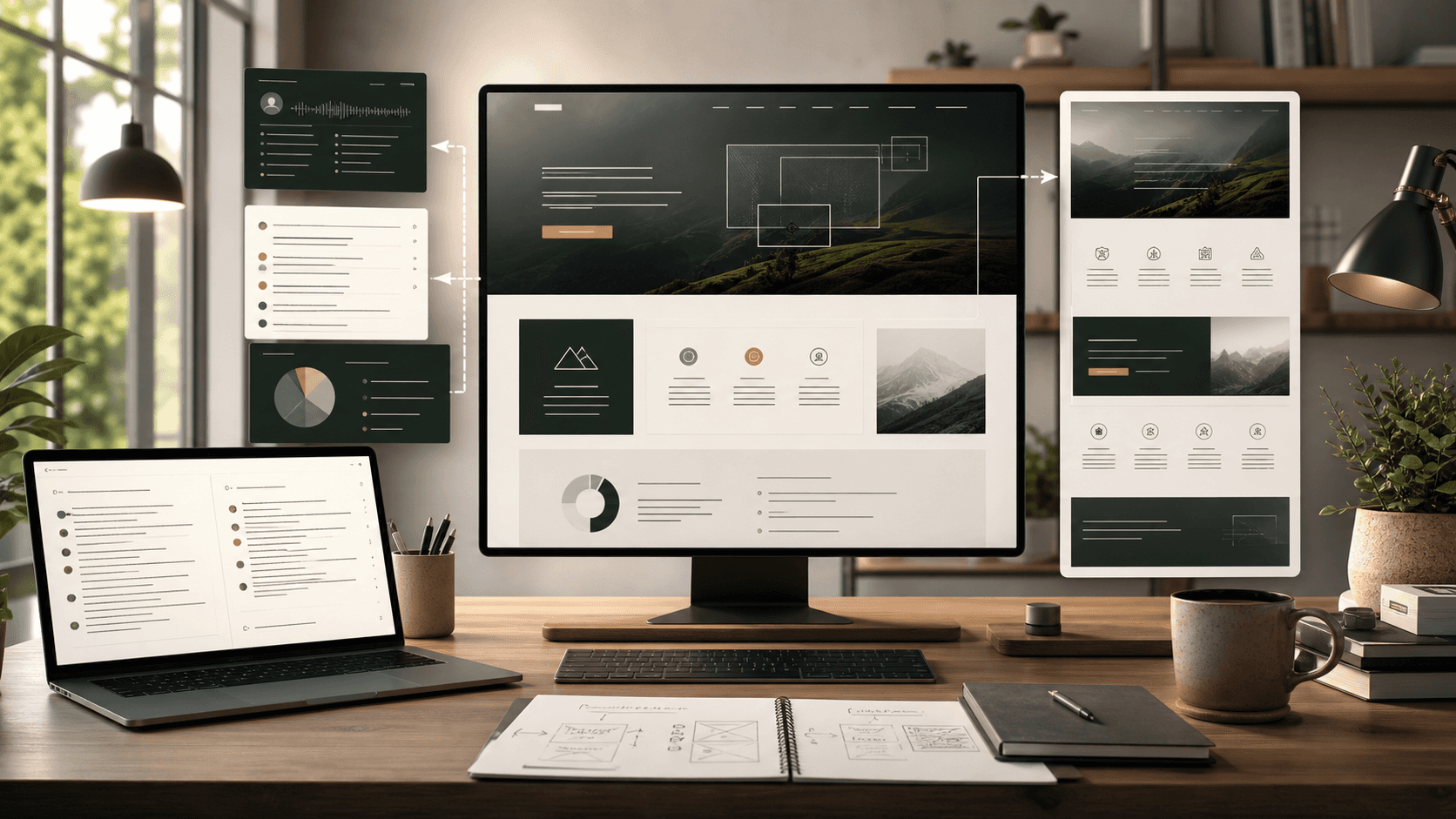
AI Can Generate a Page. LandingRabbit Wants to Make It Usable.
LandingRabbit is trying to solve the part of AI landing-page work that happens after the first draft: structure, editing, source context, feedback, and human judgment.